
Taylor Swift’s Manhattan wedding generated headlines after New York City billed her approximately $160,000 for permits and the city’s response to the event. Predictably, the internet erupted. Some insisted Taylor should have paid even more. Others rushed to defend her. Perhaps before more people scamper to take sides, we all need to calm down.
Because the more interesting story isn’t Taylor Swift’s wedding. It’s why Mayor Zohran Mamdani thought it was important for New Yorkers to know exactly how much she paid for city services.
For much of the twentieth century, cities generally treated police protection as one of the services funded through general taxation. If a private event required additional police presence, the costs were usually absorbed as part of the city’s overall responsibility to maintain public safety.
That began to change during the municipal fiscal crises of the 1970s.
As cities searched for ways to cope with growing financial pressures, they increasingly shifted costs from general taxation to identifiable users. Ambulance services became billable. User fees multiplied. Property owners assumed responsibilities once borne by cities. Permits, inspections, recreation programs, sewer laterals, water laterals, and countless other activities that had once been bundled into general taxation gradually became separate charges. As I discussed in The Municipal Financial Crisis, the proliferation of municipal fees became one visible symptom of a broader fiscal transformation.
Not all of that evolution was bad.
In fact, charging users for genuinely special services can be more just than asking every taxpayer to subsidize them. If a private event requires street closures, dedicated traffic control, or security beyond what government would ordinarily provide, there is a reasonable argument that the beneficiary—not the general taxpayer—should bear those additional costs. By contrast, government’s core responsibility to protect the public from force and maintain public order is properly funded through general taxation. The challenge is knowing where one ends and the other begins.
But adopting a user-pays model creates a new obligation.
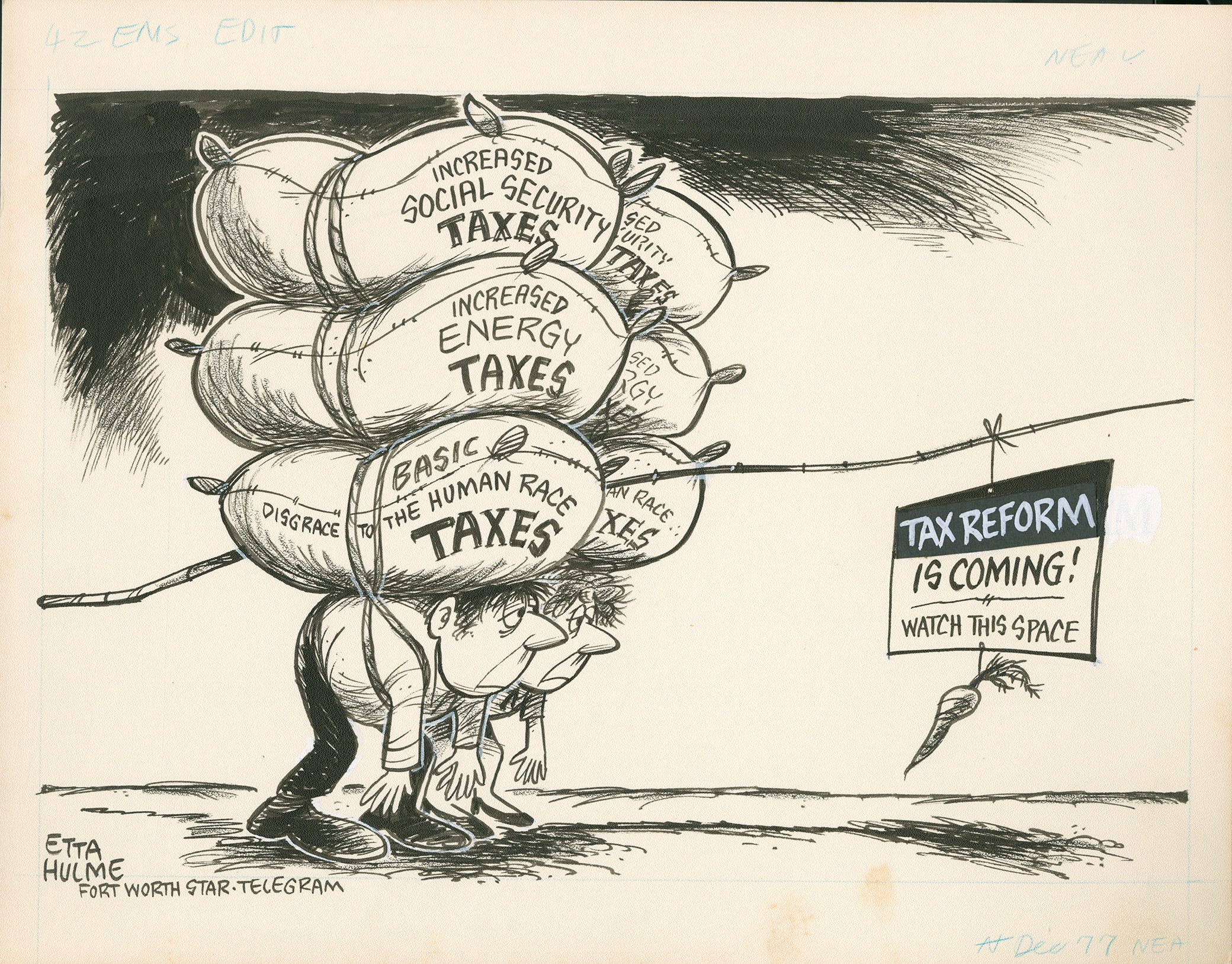
The rules governing those charges must be objective, published, and established before anyone requests the service. People should know in advance what services are billable, how the charges are calculated, and that the same methodology applies to everyone. Objective rules don’t merely inform people. They constrain government.
That’s where the Taylor Swift story becomes interesting.
Supporters of the city’s billing describe the $160,000 charge as simple cost recovery. But cost recovery isn’t self-executing. Someone had to determine how many officers were necessary, how many hours they should work, which services were required, and which costs would have been incurred regardless of the wedding. Those are judgment calls.
And even the word “cost” does more work than it appears. Overtime is only the most visible number. A city can also load onto the bill a pro-rated share of training, equipment, and medical benefits—costs the taxpayer already paid to have a police force at all, and that don’t rise because one more wedding takes place on a Saturday. The very decision to staff an event on overtime, rather than by adjusting shifts already scheduled, pushes the total toward the most expensive labor the department buys. Assembled this way, a bill can look precise to the dollar and still recover far more than the event actually cost the city. That isn’t cost recovery. It’s revenue wearing the costume of cost recovery.
We already know what honest cost accounting looks like, because we require it elsewhere. When a city spends federal grant money, every charge must be necessary, documented, and not already paid for from another source—and an independent auditor can test it. Special-event billing carries no such discipline. The same government agency writes the rule, estimates the cost, sends the invoice, and keeps the proceeds, with no one independently checking the math.
Were those judgments guided by a published methodology that would produce the same result for anyone planning a comparable event? Or were they the product of discretionary decisions that inevitably vary from case to case?
The distinction matters. The issue isn’t whether Taylor Swift was charged. It’s whether the charge was governed by objective law or subjective judgment.
The rule of law requires more than charging people for services they use. It requires that similarly situated people be treated similarly. A fee that can be adjusted according to politics, publicity, or the popularity of the person writing the check is no longer simply an invoice. It begins to resemble a shakedown.
That’s why Mayor Mamdani’s decision to publicly highlight the $160,000 payment is more significant than it first appears. The bill was no longer simply an invoice; it had become a political trophy. For a mayor whose political identity is built around taxing the rich, publicly celebrating a six-figure payment from one of the world’s wealthiest entertainers was entirely consistent with his political platform.

The episode illustrates the political uses of discretionary fees. Once government has the authority to determine individualized charges, public officials can claim credit not merely for enforcing the rules, but for demonstrating how much they extracted from particular people. Today it’s Taylor Swift. Tomorrow it could be anyone seeking a land entitlement, organizing a community event, or simply asking a city for a service.
And in practice the treatment is anything but consistent. Consider how the same city handles an almost identical activity: commercial film production. A film shoot is a private, profit-seeking venture that closes streets, occupies public space, and draws on the NYPD—the very footprint that produced Taylor Swift’s bill. Yet New York’s standing policy is to give productions free police assistance, free parking, and free access to most public locations. When the City Comptroller audited the program, it found that in a single year the city spent at least $3.9 million serving film productions but recovered only about $1 million in fees. Nearly $1.9 million of that gap was the base salaries of a dedicated 24-officer NYPD unit permanently assigned to assist productions—police costs the city simply never billed, because it wants the film business. The auditors added that even this understated the true cost, since it excluded equipment, other city services, and the disruption the shoots caused.
Same category. Opposite treatment. Nothing about the underlying cost explains the difference; only the politics does. Whether you receive a free escort or a six-figure invoice can depend not on what you cost the city, but on whether the city, at that moment, wishes to court you or to make an example of you.
Cities increasingly rely on user fees instead of general taxes to recover the cost of specialized services. That isn’t necessarily a problem. In many cases, it’s a fairer approach. But a general tax carries a fairness that individualized billing does not: it applies to everyone by the same published formula, so no official decides what any one person owes. Strip that away and fairness no longer takes care of itself—it has to be rebuilt deliberately, through published rules, consistent treatment, and a charge that reflects what the service actually cost.
Taylor Swift will almost certainly shake off both the bill and the criticism.
The real question isn’t whether she should have received an invoice. It’s whether everyone requesting the same services would have known the rules beforehand, understood how the charges were calculated, and received the same treatment.
If the rules are knowable in advance, applied equally, and the amount charged is demonstrably tied to the cost of the service provided, it’s an invoice. If not, it’s a shakedown.